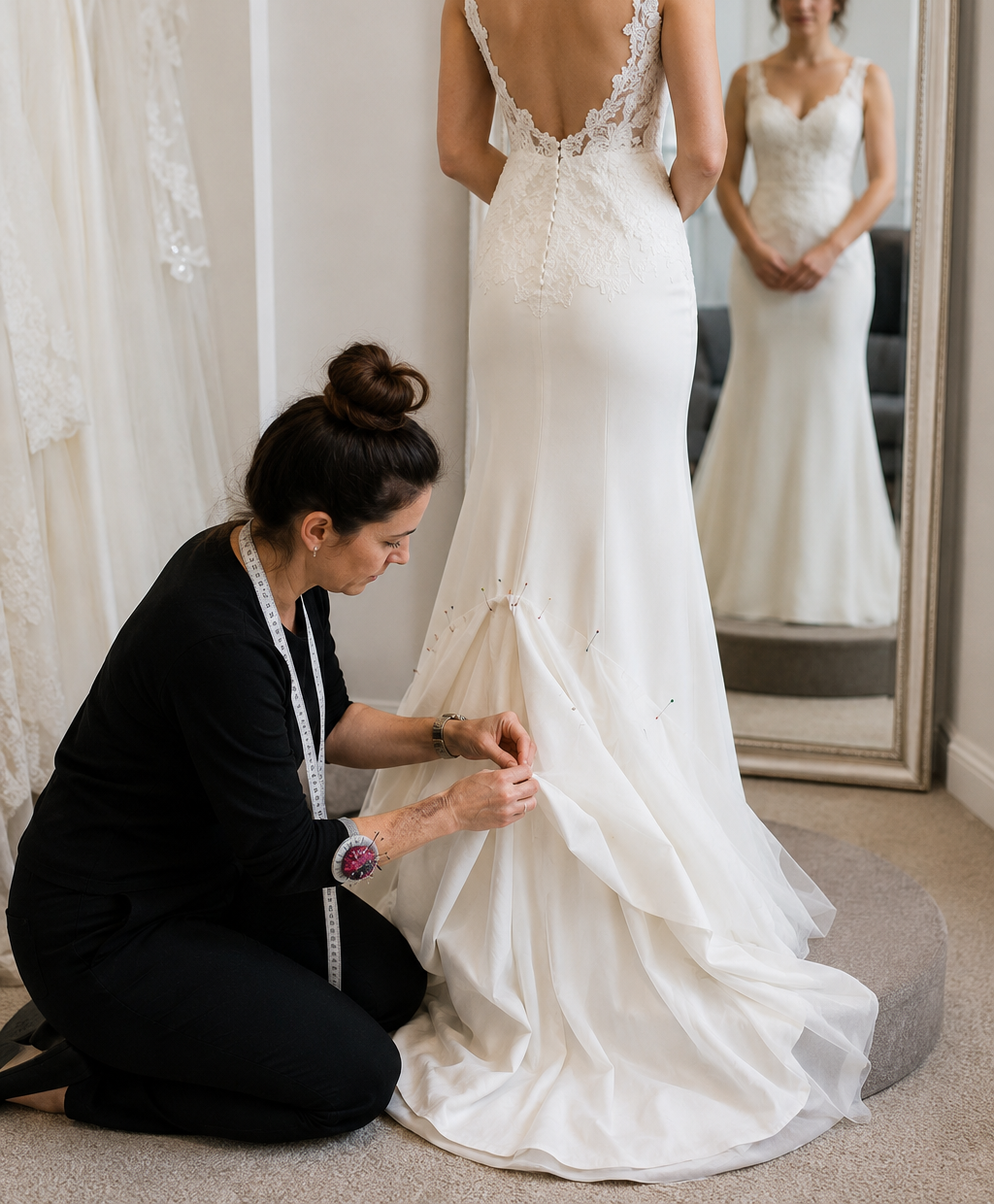
If you have searched online for wedding dress alteration prices, you have probably seen numbers that feel surprisingly low. Many national wedding websites mention alterations costing just a few hundred dollars. But in the Bay Area, the reality is very different.
The truth is that wedding dress alterations cost Bay Area brides much more than national averages. In 2026, most brides in San Francisco, Oakland, San Jose, Walnut Creek, and surrounding areas should expect to budget somewhere between 400 and 1200 dollars for standard bridal alterations. More detailed gowns with heavy lace, structure, or beading can easily go beyond 1500 dollars.
This does not mean boutiques are overcharging. Bridal alterations are highly specialized work, and Bay Area labor costs are significantly higher than many other parts of the country.
A Quick Look at Bay Area Wedding Dress Alteration Costs
Before getting into details, here is a simple breakdown of average bridal alterations Bay Area pricing for 2026.
Alteration Type | Bay Area Price Range | Notes |
Basic hem | 150 to 300$ | Single layer chiffon or organza |
Complex hem | 250 to 550$ | Lace, beading, multiple layers |
Bustle addition | 75 to 250$ | Depends on train style |
Taking in waist or hips | 100 to 250$ | Per area adjusted |
Bodice adjustment | 100 to 300$ | Structured gowns cost more |
Strap adjustment | 50 to 150$ | Beading increases labor |
Bra cups installation | 50 to 150$ | Based on construction |
Neckline alteration | 150 to 400$ | Lace and illusion cost more |
Corset back addition | 150 to 350$ | Popular for flexible sizing |
Full fitting package | 400 to 1200$ and above | Multiple fittings included |
These prices reflect actual Bay Area market conditions in 2026. Couture gowns and heavily embellished dresses usually fall on the higher end.
Find the Perfect Dress With the Perfect Fit
Find your dream dress with expert guidance at Flares Bridal. Our team will help you understand gown pricing, alteration expectations, and the perfect fit from day one.
Why Bridal Alterations Cost More in the Bay Area
One of the biggest reasons brides feel surprised by pricing is because national averages rarely reflect local reality.
The Bay Area has:
- Higherlaborcosts
• Higher rent and operating expenses
• Greater demand for bridal specialists
• More designer and couture gowns requiring advanced work
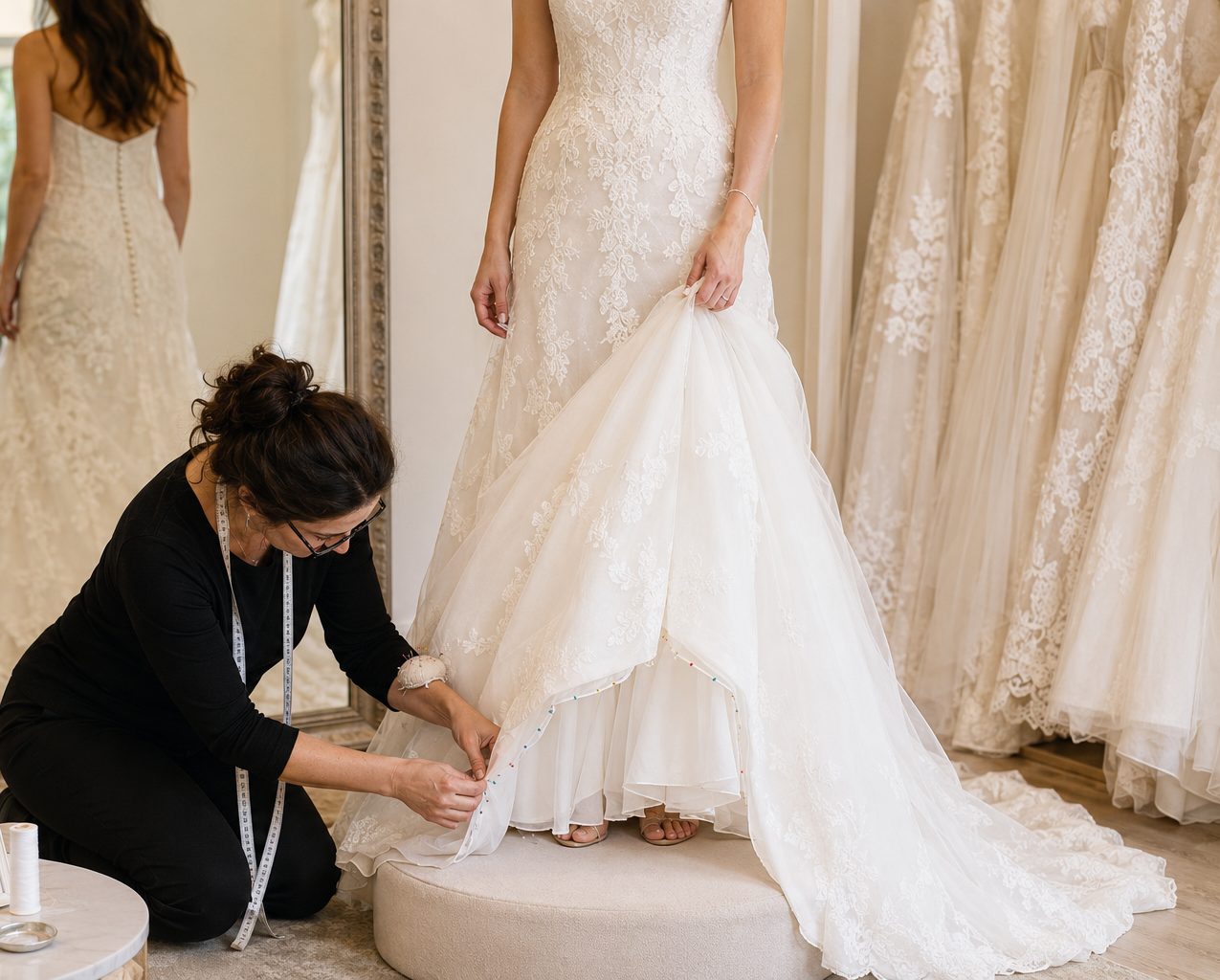
A bridal seamstress is not simply hemming a dress. Many gowns include boning, lace placement, layered fabrics, built in structure, and detailed beadwork that require hours of precision.
Good bridal alterations are highly skilled work.
Did You Know?
According to The Knot, the average cost of wedding dress alterations nationally is between $700 and $1,000 for a gown with standard complexity, including a hem, bustle, and bodice adjustments across multiple fittings. Bay Area brides typically pay at the upper end of that range or above it, due to higher regional labor costs and the prevalence of designer gowns requiring specialized work.
Fabric Type Changes the Cost More Than Brides Expect
Fabric is one of the biggest factors affecting alteration pricing.
Simple fabrics are usually easier to work with. Chiffon, jersey, and lightweight organza generally require less labor.
More structured fabrics like mikado or duchess satin demand greater precision because every stitch and adjustment becomes more visible.
Beaded wedding dresses and lace wedding dresses increase costs even more because many changes must be done by hand.
For example:
- A simple hem on plain chiffon may cost much less
- A lace hem with scalloped edging can require hours of hand placement work
This is why two dresses with the same silhouette may have completely different alteration quotes.
The Amount of Size Change Also Matters
Small adjustments are usually straightforward.
But larger size changes often require much more than simply “taking the dress in.”
For example, significant changes may involve:
- Reshaping the bodice
- Moving boning and structure
- Repositioning lace or beadwork
- Rebalancing seams throughout the gown
This is one reason wedding dress tailoring cost San Francisco brides experience varies so widely from dress to dress.
More extensive adjustments usually mean more fitting appointments and more labor hours.
Most Brides Need More Than One Fitting
Many brides assume alterations happen in one appointment, but that is rarely the case.
Most bridal gowns require:
- First fitting for pinning and assessment
- Second fitting for refinements
- Final fitting before pickup
For more complex gowns or larger size adjustments, additional appointments may be necessary.
Most Bay Area seamstresses either:
- Charge per fitting session
- Or provide one full package quote upfront
It is always helpful to ask how pricing works before alterations begin.
Boutique Alterations vs Independent Seamstresses
Brides often wonder whether they should stay with the boutique or work with an outside seamstress.
Both options can work well, but there are differences.
Boutique Alterations
Boutique alterations are usually more convenient because:
- The staff already understands the gown construction
- Dresses stay onsite
- Communication is simpler
Boutique alterations may cost slightly more, but many brides appreciate the smoother process.
Independent Seamstresses
Independent seamstresses can sometimes offer lower pricing. However, bridal alterations are very different from standard tailoring.
A tailor who works mostly on everyday clothing may not have experience with:
- Bridal boning
- Layered skirts
- Corset structure
- Heavy trains
- Lace placement
For designer gowns or heavily embellished dresses, working with a bridal specialist is usually worth it.
When Should You Start Wedding Dress Alterations?
Timing matters more than many brides realize.
Bay Area bridal seamstresses book up quickly, especially between May and September.
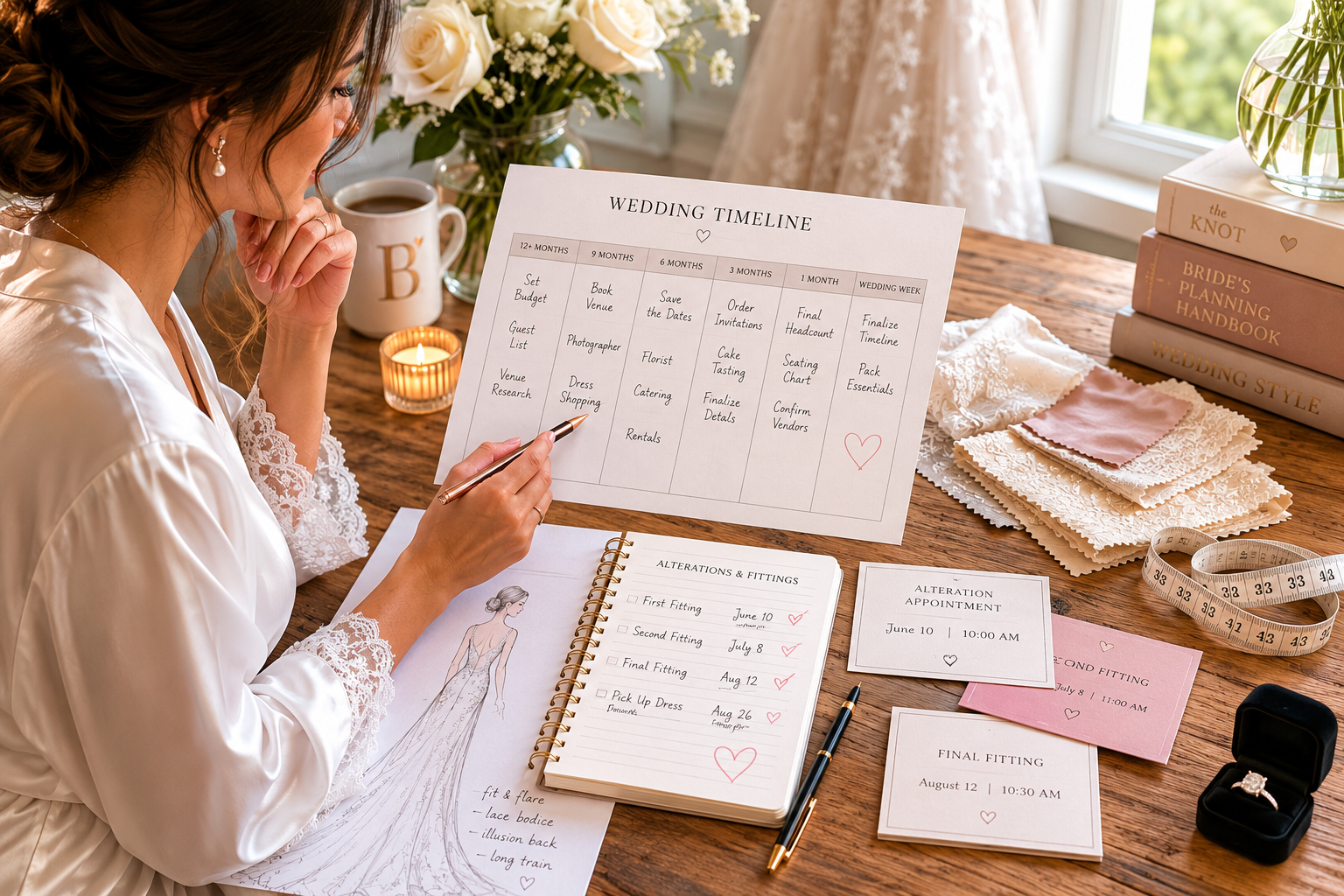
Here is the ideal timeline for most brides:
| Alteration Milestone | Recommended Timing |
|---|---|
| Purchase your dress | 10 to 14 months before wedding |
| Dress arrives | 4 to 6 months before wedding |
| First fitting | 3 to 4 months before wedding |
| Second fitting | 6 to 8 weeks before wedding |
| Final fitting | 1 to 2 weeks before wedding |
| Dress pickup | 2 to 5 days before wedding |
Waiting too long can create unnecessary stress and expensive rush fees.
Start Early. Stress Less. Find Your Perfect Dress
The best way to avoid rushed alterations and unexpected costs is to start your dress search early. Book a private bridal appointment at Flares Bridal and explore designer gowns with expert guidance tailored to your timeline and budget.
Wedding Dress Alterations Are Part of the Full Bridal Investment
When planning your budget, it helps to think of alterations as part of the full dress experience instead of an extra surprise cost.
The reality is that most wedding dresses are designed to be customized slightly to each bride’s body and preferences.
The right alterations help the gown feel truly yours.
At Flares Bridal in Walnut Creek, brides receive guidance not only during dress selection but also throughout the fitting and alteration process, helping make timelines, costs, and expectations feel much clearer from the beginning.
Frequently Asked Questions
1. Is 1000 dollars too much to spend on wedding dress alterations in the Bay Area?
Not necessarily. For a heavily detailed designer gown with multiple layers, lace, beading, or several fittings, that price can actually be very normal. In the Bay Area, skilled bridal alteration work takes time and precision. Simpler dresses usually cost much less, while couture gowns naturally require more labor. Most brides receive a clearer estimate after their first fitting appointment.
2. Why are Bay Area wedding dress alterations more expensive than national averages?
The biggest reason is local labor cost and specialization. Wedding dress alterations cost Bay Area brides more because bridal seamstresses here are working in a very high cost region and often handle complex designer gowns. National averages online rarely reflect San Francisco, Oakland, San Jose, or Peninsula pricing accurately. Bridal tailoring also requires specialized skills that regular tailoring does not always involve.
3. How many fittings do most Bay Area brides need?
Most brides usually need two to three fittings before the dress is complete. Brides with more detailed gowns, major size adjustments, or added features like bustles may need additional appointments. The timeline also depends on how early alterations begin. Starting earlier gives your seamstress more flexibility and helps avoid rushed adjustments later.
4. What is usually included in a bridal alteration package?
A standard bridal alterations Bay Area package often includes hemming, bodice adjustments, bustle creation, and fit refinements across multiple fittings. Some boutiques charge per alteration, while others provide one full package price upfront. It is always smart to ask for an itemized estimate early in the process. This helps brides understand exactly what they are paying for before work begins.
5. Can I get my wedding dress altered at the last minute in the Bay Area?
Technically yes, but it is risky and usually much more expensive. Most experienced bridal seamstresses prefer at least four to six weeks for proper fittings and adjustments. During peak wedding season, schedules fill very quickly. Rush alterations often come with extra fees, and the process can become more stressful than necessary.
6. Do heavily beaded dresses always cost more to alter?
Most of the time, yes. Beaded wedding dresses and lace wedding dresses usually require hand work because details often need to be removed and replaced carefully during alterations. This adds hours of labor compared to simpler fabrics. Brides researching wedding dress tailoring cost San Francisco prices are often surprised by how much embellishment changes the final quote. Detailed gowns simply take more time and precision.
7. Should I use my bridal boutique’s seamstress or find my own?
Both options can work well, but boutique seamstresses often already understand the gown’s construction and fit. This can be especially helpful with designer dresses or structured bodices. Independent seamstresses may sometimes cost less, but bridal experience matters a lot. Wedding gowns are far more complex than regular tailoring work.
8. When should I schedule my first fitting?
Most brides should schedule their first fitting about three to four months before the wedding. This allows enough time for adjustments, follow up fittings, and any unexpected changes. Waiting too long can create scheduling problems, especially during busy wedding months. Starting earlier usually makes the process feel calmer and easier.
9. What if my weight changes before the wedding?
Small changes are usually manageable, especially if your seamstress knows early enough. Larger changes may require more significant restructuring inside the gown. This is why communication is important throughout the process. A skilled bridal seamstress Bay Area price quote may also shift slightly if major adjustments become necessary later.
10. Are alterations really necessary if my dress already fits pretty well?
Usually, yes. Wedding dresses are designed to fit closely and photograph beautifully, so even small adjustments make a noticeable difference. Alterations help improve comfort, posture, support, and movement throughout the day. A properly tailored gown often feels completely different from an untouched sample dress. Even minor refinements can elevate the entire bridal look.